
ITS Gene Sequencing
Internal Transcribed Spacer (ITS) region sequencing for accurate plant species identification.
Introduction
The Internal Transcribed Spacer (ITS) region of nuclear ribosomal DNA is one of the most powerful molecular markers for plant species identification. Although the official core plant barcode is rbcL + matK, the nuclear ITS region (especially ITS2) is widely used as a supplementary or standalone marker because of its high evolutionary rate and excellent species-level resolution.
At Yaazh Xenomics, we provide high-quality Sanger sequencing for the ITS region with expert primer selection and data analysis.
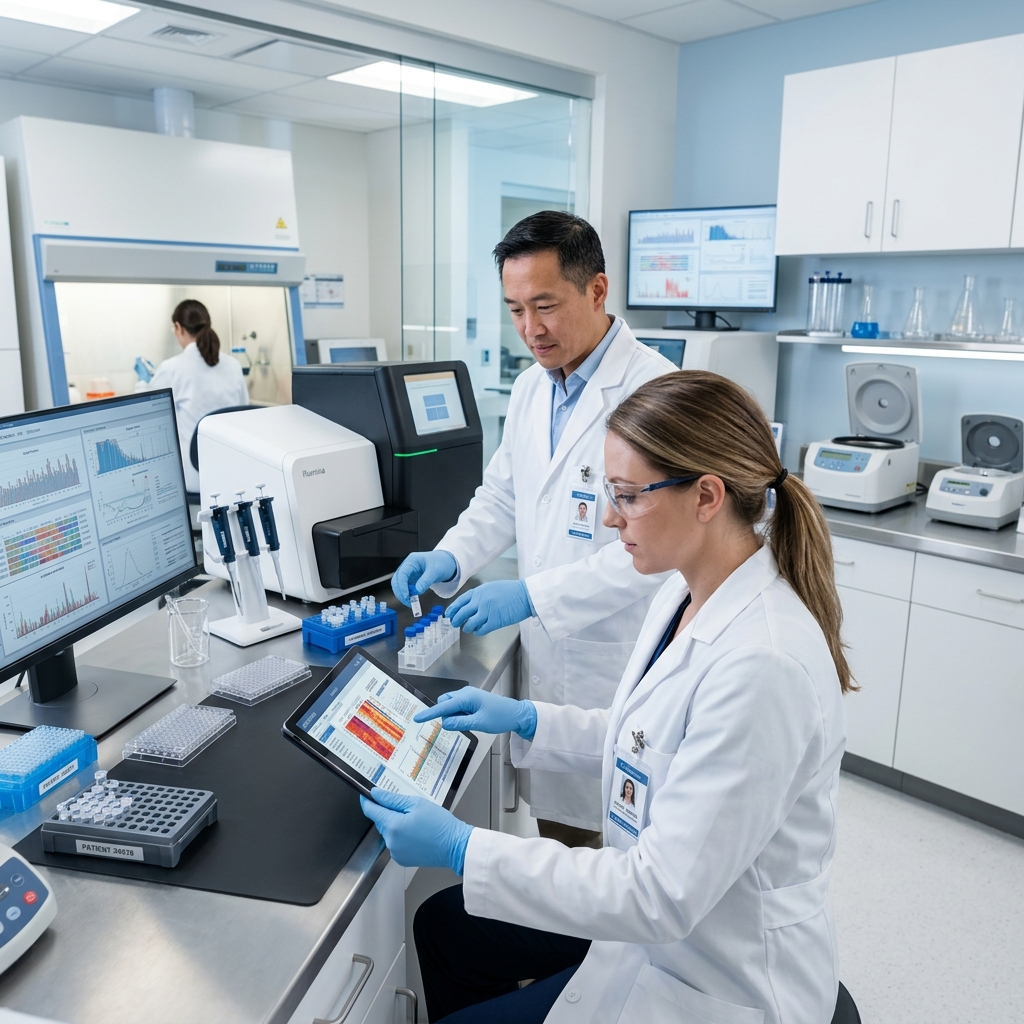
PCR and Sequencing Workflow
1. DNA extraction from plant tissue.
2. PCR amplification using chosen primer pair.
3. Gel verification and product purification.
4. Bidirectional Sanger sequencing.
5. Sequence editing and quality control.
6. BLAST search against BOLD and NCBI databases.
7. Phylogenetic analysis (if required).
8. Detailed identification report with similarity scores and recommendations.
Typical turnaround time
5–7 working days.
Recommended Region for Plant Species Identification
Why we recommend ITS2
For routine plant species identification, we strongly recommend the ITS2 region (amplified using ITS3 + ITS4 primers) as the primary choice when using nuclear markers.
When to choose Full ITS (ITS1 + ITS4)
- When maximum phylogenetic information is required.
- For studies involving hybridization or closely related species complexes.
- When working with fresh, high-quality plant material where amplification success is not an issue.
What is the ITS Region?
The ITS region is located between the 18S and 28S ribosomal RNA genes and consists of: • ITS1 (highly variable spacer) • 5.8S rRNA gene (conserved) • ITS2 (highly variable spacer) • Full ITS amplicon size (ITS1 + 5.8S + ITS2): ≈ 600–800 bp • ITS2-specific amplicon size: ≈ 300–500 bp
Advantages of ITS1 + ITS4 Primer Pair
The ITS1 + ITS4 primer pair is one of the most popular and reliable combinations for plant ITS sequencing. Key advantages include: • Amplifies the entire ITS region (ITS1 + 5.8S + ITS2), providing maximum sequence information. • High amplification success rate across most angiosperms. • Excellent discriminatory power for species-level identification. • Suitable for fresh and moderately degraded samples. • Cost-effective single-reaction approach.
Standard Primers for Plant ITS Sequencing
| Primer Pair | Forward Sequence (5′→3′) | Reverse Sequence (5′→3′) | Target Region | Amplicon Size | Annealing Temp |
|---|---|---|---|---|---|
| ITS1 + ITS4 | TCCGTAGGTGAACCTGCGG | TCCTCCGCTTATTGATATGC | Full ITS (ITS1+5.8S+ITS2) | 600–800 bp | 55 °C |
| ITS5 + ITS4 | GGAAGTAAAAGTCGTAACAAGG | TCCTCCGCTTATTGATATGC | Full ITS | 600–800 bp | 55 °C |
| ITS3 + ITS4 | GCATCGATGAAGAACGCAGC | TCCTCCGCTTATTGATATGC | ITS2 only | 300–500 bp | 55 °C |
Comparison of ITS Regions
Key Insights: ITS2 is shorter, amplifies more reliably, and shows fewer paralog problems. Full ITS provides the richest data but can be harder to amplify cleanly in some taxa.
| Feature | ITS1 | ITS2 | Full ITS (ITS1+5.8S+ITS2) | Winner for Species ID |
|---|---|---|---|---|
| Length | ~250–350 bp | ~200–350 bp | 600–800 bp | ITS2 (easier) |
| Amplification Success | Moderate | High | Moderate to High | ITS2 |
| Variability / Resolution | High | Very High | Highest | Full ITS |
| Paralog Issues | More common | Less common | Can occur | ITS2 |
| Performance on Degraded DNA | Good | Excellent | Moderate | ITS2 |
| Discrimination Power | Good | Excellent | Excellent | Full ITS / ITS2 |
| Ease of Sequencing | Good | Very Good | Good | ITS2 |
| Recommended Use | Supplementary | Primary barcode region | Maximum data requirement | ITS2 |
Applications
- • Species-level plant identification and discovery of cryptic species
- • Authentication of medicinal plants, herbs, and spices
- • Biodiversity assessment and ecological research
- • Detection of invasive species
- • Quality control in pharmaceutical and food industries
- • Forensic botany and timber identification
Why Choose Yaazh Xenomics?
Flexibility: We offer flexible primer options (ITS1+ITS4, ITS3+ITS4, or custom), optimized protocols, and expert bioinformatics support.
Reliability: Whether you need full ITS or the recommended ITS2 region, we deliver accurate, publication-ready results.