
DNA Sequencing vs DNA Testing in India
Key Differences, Technologies & Which One You Need
DNA Sequencing vs DNA Testing in India
Published by Yaazh Xenomics | March 2026 | Coimbatore, India
In India's fast-growing genomics market, people often search for "DNA testing" or "genome sequencing" interchangeably. However, DNA Sequencing and DNA Testing are fundamentally different in purpose, technology, depth, and applications — especially for research, academics, and clinical needs.
Why Researchers & Students in India Choose DNA Sequencing
Publication-ready high-depth data
Expert bioinformatics analysis
Support for Whole Genome, Exome, 16S/Shotgun Metagenomics
Affordable pricing tailored for Indian academia
ISO-certified quality with fast turnaround
What is DNA Sequencing?
About
- ✓ **DNA Sequencing** determines the exact order of nucleotides (A, T, C, G) in a DNA molecule. It provides comprehensive, high-resolution data.
- ✓ Applications include Whole Genome Sequencing (WGS), Whole Exome Sequencing (WES), Metagenomics, Transcriptomics, and custom gene panels.
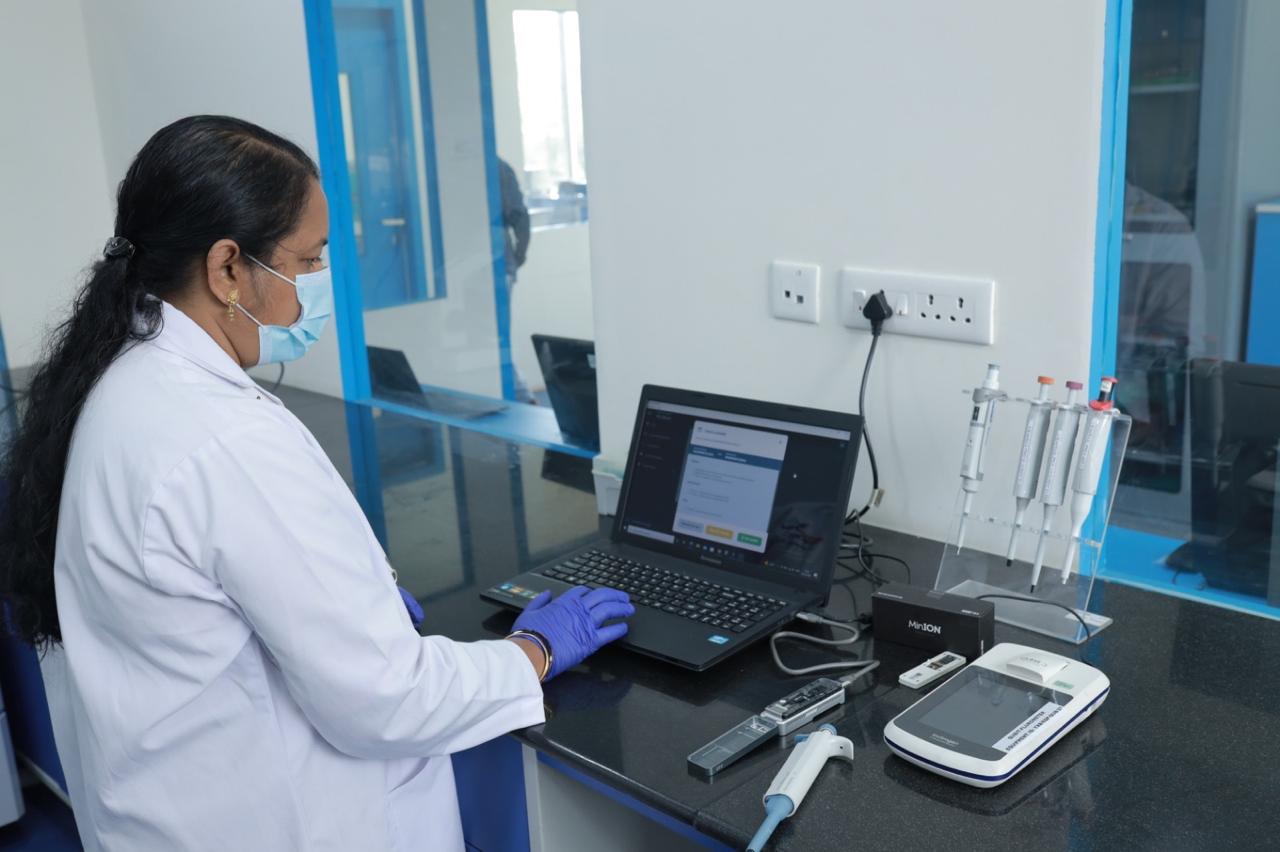
Modern DNA sequencing in India mainly uses Next-Generation Sequencing (NGS) technologies such as:
- ✗ Illumina sequencing (short-read, high accuracy)
- ✗ Oxford Nanopore (long-read, real-time)
- ✗ PacBio (long-read, high fidelity)
- ✗ Sanger sequencing (gold standard for small regions)
What is DNA Testing?
- •**DNA Testing** (also called DNA analysis or genotyping) typically refers to targeted tests that examine specific parts of your DNA. In India, most consumer and many clinical "DNA tests" use **SNP microarray** technology. This method checks known genetic markers (SNPs) rather than reading the entire DNA sequence.
- •Common examples in India:
- •Ancestry & ethnicity DNA tests
- •Paternity & relationship testing
- •Basic health & wellness trait reports
- •Pharmacogenomics (drug response) panels
Applications in the Indian Context
India's diverse genetic landscape makes high-quality sequencing especially valuable for:
Population Variants
Understanding population-specific variants (Genome India Project reference).
Plant Genomics
Agricultural & plant genomics to enhance yield and disease resistance.
Microbiome Studies
Microbiome & gut health studies for personalized medicine and research.
Side-by-Side Comparison
Parameter-by-parameter comparison of research-grade DNA Sequencing versus consumer/targeted DNA Testing.
| Parameter | DNA Sequencing (Research Grade) | DNA Testing (Consumer / Targeted) | |
|---|---|---|---|
| Technology | Next-Generation Sequencing (NGS), Sanger, Long-read | SNP Microarray / Genotyping arrays | |
| Data Output | Full or near-full DNA sequence; raw FASTQ/BAM files | Only selected SNPs (hundreds of thousands) | |
| Depth & Accuracy | High coverage (30x–100x+); detects rare & novel variants | Limited to known common variants | |
| Best For | Research, PhD thesis, publications, microbial analysis, disease gene discovery, metagenomics | Ancestry, paternity, basic wellness & trait screening | |
| Cost in India (2026) | ₹15,000 – ₹2,50,000+ (depending on project) | ₹4,999 – ₹25,000 | |
| Turnaround Time | 10–45 days | 2–6 weeks | |
| Raw Data Provided? | Yes (full datasets) | Rarely | |
| Suitable for Publications? | Yes | No |