What is Next-Generation Sequencing (NGS) & Why It's Revolutionizing Genomics in India
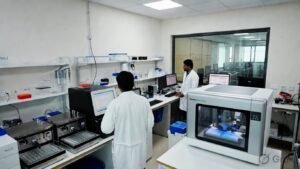 What is Next-Generation Sequencing (NGS) and Why It's Revolutionizing Genomics in India
Next-Generation Sequencing (NGS), also known as high-throughput or massively parallel sequencing, represents a transformative leap in nucleic acid analysis technology. Unlike traditional Sanger sequencing, which processes one DNA fragment at a time, NGS simultaneously sequences millions to billions of DNA or RNA fragments in parallel. This enables ultra-high throughput, scalability, and dramatically reduced costs per base, making comprehensive genomic studies feasible on a large scale.
Introduced in the mid-2000s as second-generation sequencing (with third-generation long-read platforms emerging later), NGS has democratized access to genomic data. It determines the precise order of nucleotides (A, T, C, G) in DNA or RNA molecules, revealing genetic variations such as single nucleotide polymorphisms (SNPs), insertions/deletions (indels), copy number variations (CNVs), and structural variants.
In India, NGS is fueling a genomics revolution. With the completion of the Genome India Project (mapping ~10,000 diverse Indian genomes by 2024 and expanding toward 100,000), national initiatives, and rapid cost reductions, NGS is accelerating precision medicine, agricultural innovation, and research. India's NGS market is projected to grow robustly, with estimates indicating significant expansion (e.g., regional Asia-Pacific CAGR exceeding 14–25% in recent forecasts), driven by declining sequencing costs (whole-genome sequencing now often under $200 in accessible setups) and increasing adoption in clinical and research settings.
How Does Next-Generation Sequencing Work? (Step-by-Step)
NGS follows a standardized workflow:
- Sample Extraction and Library Preparation High-quality DNA or RNA is extracted from samples (e.g., blood, tissue, or environmental material). The nucleic acid is fragmented into short pieces (typically 100–500 bp for short-read platforms). Adapters (known oligonucleotide sequences) are ligated to fragment ends to enable amplification and sequencing.
- Amplification (Cluster Generation or Emulsion PCR) Fragments are amplified to create clonal clusters or beads. For example, Illumina uses bridge amplification on a flow cell surface to generate millions of identical copies per cluster.
- Sequencing (Massively Parallel Reading) Nucleotides are incorporated and detected in cycles. Detection methods vary by platform:
- Fluorescence (sequencing-by-synthesis in Illumina)
- Ion detection (semiconductor in Thermo Fisher)
- Real-time electrical signals (nanopore in Oxford Nanopore) This step produces millions of short "reads" (sequences of 50–300 bp or longer in third-gen).
- Data Analysis and Bioinformatics Raw reads undergo quality control, alignment to a reference genome (or de novo assembly), variant calling, annotation, and interpretation. Advanced pipelines handle alignment, variant detection, and functional insights.
This parallel approach contrasts sharply with Sanger sequencing's serial nature, enabling whole-genome coverage at depths of 30× or higher for accurate variant detection.
Key NGS Platforms Available in India (2026 Landscape)
India's labs leverage a diverse ecosystem of platforms for flexibility:
- Illumina (Sequencing-by-Synthesis): Dominant for high-accuracy short reads; ideal for clinical exome, whole-genome, and transcriptomics.
- Oxford Nanopore Technologies: Long-read, real-time, portable sequencing; excels in structural variant detection, metagenomics, and native molecule analysis (DNA/RNA/protein).
- PacBio (SMRT Sequencing): High-consensus long reads for complex genomes, repetitive regions, and epigenetic modifications.
- MGI Tech (DNBSEQ): Cost-effective, high-throughput alternatives with growing adoption in Asia.
- Thermo Fisher (Ion Torrent): Fast, scalable semiconductor sequencing for targeted panels and amplicon workflows.
Multi-platform access (as offered by advanced labs) optimizes project-specific needs, balancing accuracy, read length, and cost.
Why NGS is Revolutionizing Genomics in India
Several factors make NGS a game-changer:
- Cost and Accessibility: Sequencing costs have plummeted globally and in India, with whole-genome options now affordable (often Rs.15000/- in optimized setups), enabling widespread use by researchers, students, and clinicians.
- National Genomic Initiatives: The Genome India Project provides a diverse reference database for Indian populations, addressing underrepresentation in global datasets and supporting population-specific variant discovery.
- Market Growth: India's NGS sector benefits from high CAGRs (e.g., 20%+ in projections through 2030s), fueled by diagnostics, precision oncology, and biotech investments.
- Speed and Scale: Turnaround times drop from weeks/months to days, with high-throughput data generation supporting large cohorts.
- Data-Driven Insights: Enables population genomics, rare variant detection, and integration with AI for variant interpretation.
Top Applications of NGS in India
NGS drives impact across sectors:
- Clinical & Medical Genomics Whole-exome/genome sequencing for rare diseases, cancer panels (e.g., tumor profiling), pharmacogenomics, and carrier screening.
- Precision Medicine Tailored therapies based on individual genetic profiles, supported by Genome India data for ethnicity-specific insights.
- Research & Academic Genomics Transcriptome (RNA-Seq), epigenomics, and large-scale studies in universities and institutes.
- Agriculture & Biodiversity Crop improvement (e.g., drought-resistant varieties via marker-assisted breeding), DNA barcoding (16s rRNA for microbes, RBCL/MatK for plants), and livestock genomics.
- Environmental & Metagenomics Gut microbiome analysis, soil/water microbial profiling, and biodiversity monitoring.
- Infectious Diseases Pathogen identification, outbreak tracking, and surveillance.
Advantages of NGS Over Traditional Methods
| Aspect | Sanger Sequencing | NGS |
|---|---|---|
| Throughput | Low (1 fragment at a time) | Millions–billions of fragments |
| Cost per Base | High | Very low (dramatic reductions) |
| Read Length | Long (~800–1000 bp) | Short (50–300 bp) or long (>10 kb) |
| Speed | Slow | Fast (days for large projects) |
| Applications | Targeted validation | Whole-genome, exome, metagenomics, etc. |
| Coverage Depth | Limited | High (e.g., 30×–1000× for variants) |
Challenges and Future of NGS in India
Challenges include bioinformatics expertise needs, data storage/interpretation, ethical considerations (privacy, equity), and initial infrastructure costs. However, the future is bright: AI integration for analysis, long-read dominance for complex genomes, expanded clinical reimbursement, and localized affordable services will drive further adoption.
Why Choose Yaazh Xenomics for Your NGS Needs in India?
As South India's leading genomics laboratory in Coimbatore, Yaazh Xenomics offers multi-platform expertise (Illumina, Nanopore, PacBio, MGI, Thermo), affordable pricing, fast sample-to-report turnaround, customized bioinformatics, and 24/7 technical support. Our ISO-certified facility ensures high-precision results for research, clinical, agricultural, and analytical projects.
Ready to explore NGS for your work? Contact Yaazh Xenomics today for a consultation or quote. Unlock genomic insights with confidence — where precision meets affordability.
FAQ
- What is the main difference between NGS and Sanger sequencing? NGS sequences millions of fragments in parallel for high throughput and low cost, while Sanger is sequential and suited for targeted, low-volume work.
- How much does NGS cost in India in 2026? Costs vary by project, but whole-genome sequencing is increasingly affordable (often under $200 in optimized workflows), with targeted panels even lower.
- Which NGS platform is best for beginners in India? Illumina for high-accuracy short reads or Nanopore for portable, real-time long reads — depending on application.
- What are common NGS applications in Indian agriculture? Crop trait improvement, DNA barcoding for species identification, and microbiome studies for soil health.
- How long does an NGS project take? From sample submission to report: typically days to weeks, depending on scale and platform.
Yaazh Xenomics – Finest Life Science Services at the Best Prices. Visit yaazhxenomics.com to get started!
Leave a Reply